

The car interior: a living space on its own
Today, vehicles on the market are becoming much more than just a means of transport to take us from A to B.
Whether commuting to work or going on vacation, we spend a lot of time in our cars. Manufacturers understand this well: the interior is now designed and imagined as a cocoon, where every detail must guarantee optimal comfort.
The figures speak for themselves: a 2016 study already indicated that we spend an average of 32,000 hours of our lives in a vehicle. Ten years later, with the evolution of our lifestyles, this figure has continued to climb. Given the amount of time spent on the road, user requirements have naturally evolved.
Interior design, whether for combustion engine or electric car models, is moving towards ever greater modularity. Drivers no longer want just a seat and a steering wheel; they demand an intuitive space.
Every component, from the seat upholstery to the most discreet storage system, must play its part in providing a smooth, high-quality experience.
This is where our textile expertise comes into its own: transforming technical constraints into invisible and effective comfort solutions.
Successfully designing a passenger compartment is a constant balancing act. For us, as an industrial partner, this is based on four fundamental pillars:
- Space optimization: the challenge is to offer smart storage solutions that make use of every inch of space without ever cluttering up the passenger compartment.
- Occupant safety: this is our priority. We ensure that every object, even lightweight ones, is securely held in place to prevent any risk of it being thrown forward in the event of sudden braking or impact.
- Durability: an interior must be able to withstand years of intensive use, friction, and handling without losing its technical properties.
- Design: aesthetics must never be sacrificed. Each textile component must blend harmoniously with the aesthetic chosen by the manufacturer to create a coherent, high-end atmosphere.
Textile organization and storage solutions: the art of optimizing interior space
To meet these requirements for modularity and comfort, we have developed a range of textile solutions for automobiles that adapt to every corner of the vehicle.
Our goal is simple: to provide a place for every object, freeing the driver’s mind and securing the passenger space.
Storage nets: a versatile solution
Nets remain the ideal solution for optimizing storage space in cars. They are lightweight, only take up space when in use, and can be installed where rigid storage solutions would be too bulky or costly to produce.
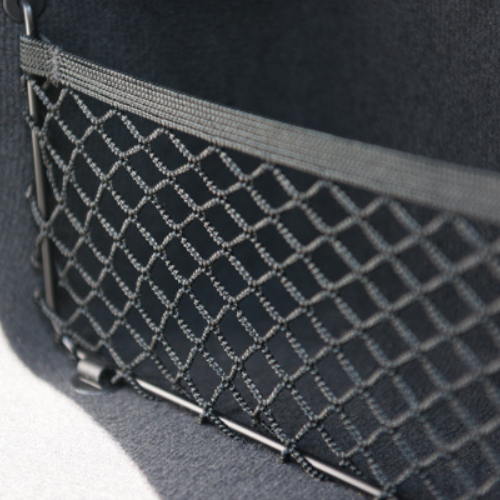
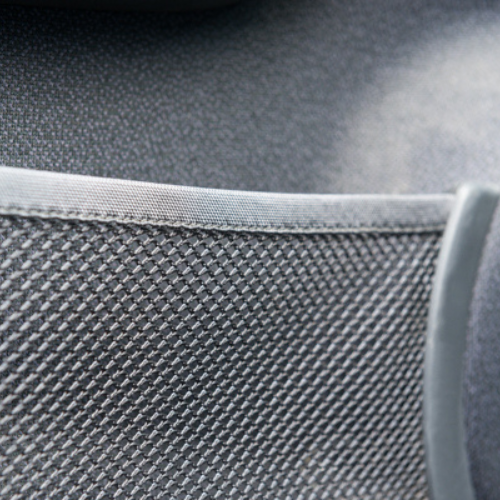
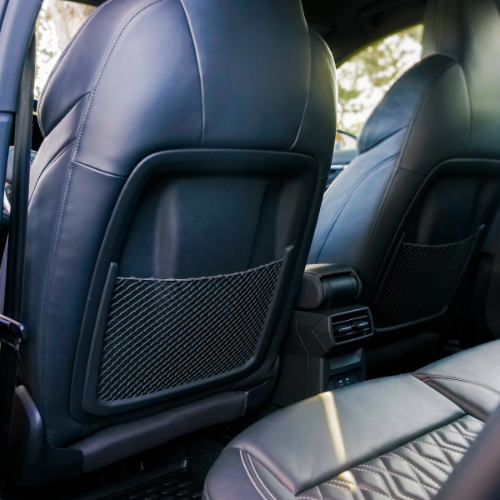
Seatback storage nets: These are a must-have in any vehicle, but we have perfected them. Placed behind the front seats, our nets retain their original tension so they don’t sag over time. They allow passengers to store tablets or documents while preserving maximum legroom.
Several types of mounting are possible depending on the specifications and constraints of the project. The nets can be mounted directly on the seats. They can also be mounted on metal or plastic frames as needed.
Storage nets for doors and consoles: We create solutions that fit the shape of your door panels or center consoles. This is the ideal way to provide secure storage for small items (keys, phones, cables) while preventing vibration noise while driving.
Beyond comfort, our products play a key role in onboard safety. A well-organized interior is a safer interior.
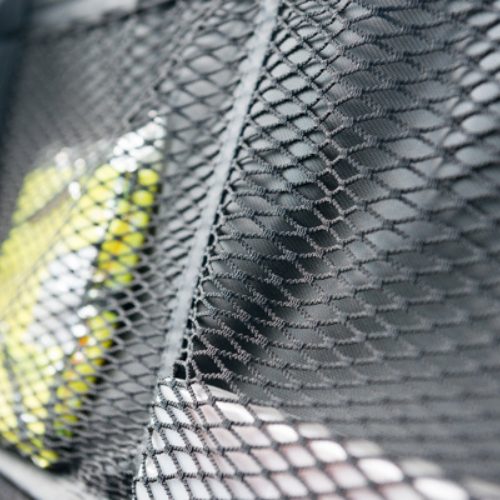
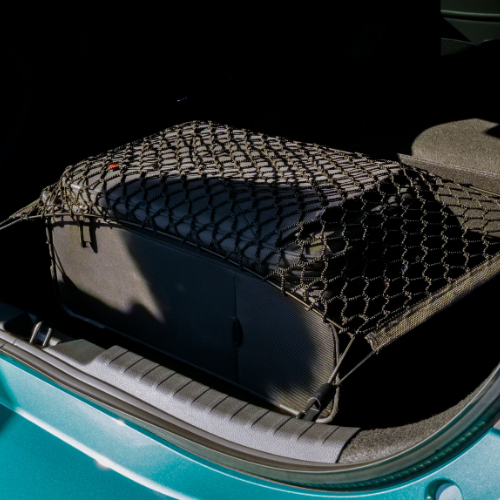
Separation nets and luggage barriers: For your family or utility models, we manufacture nets capable of withstanding significant tension. In the event of sudden braking, they prevent luggage from being thrown forward. It is a lightweight protective barrier that is easy for the user to handle, yet extremely effective.
Keeping items secure in the trunk: Our trunk nets and envelope-style models help keep items in place. This not only prevents breakage, but also reduces noise from rolling items during driving.
Why choose storage nets?
The weight advantage: a compelling argument for your product lines
We know that you are looking to eliminate every last unnecessary pound, particularly to optimize the range of electric vehicles. Textiles are your best ally.
By replacing certain heavy structures with net storage solutions, you can lighten your vehicle interiors without sacrificing functionality or ergonomics. It’s a simple and effective solution to help you achieve your overall weight reduction goals while providing a high-quality user experience.
Beyond nets, a vehicle’s interior relies on a multitude of “invisible” textile components that are essential to its everyday functionality.
Straps and restraint systems: high-performance textiles
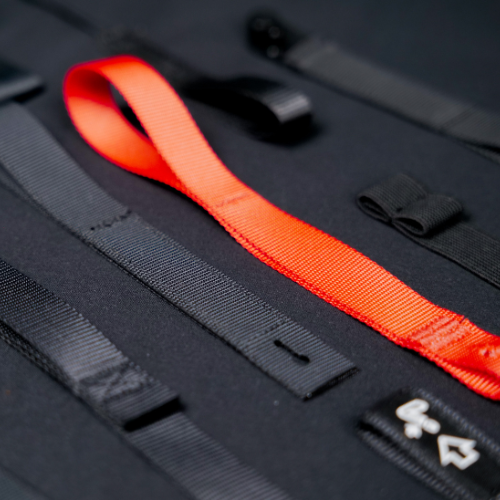
While nets organize the space, straps, although invisible, constitute the true architecture of the car seat. They are essential for holding the foam in place, supporting the seat, and ensuring the overall ergonomics of the seat.
Depending on the needs for modularity or structure, we develop three main ranges of technical straps:
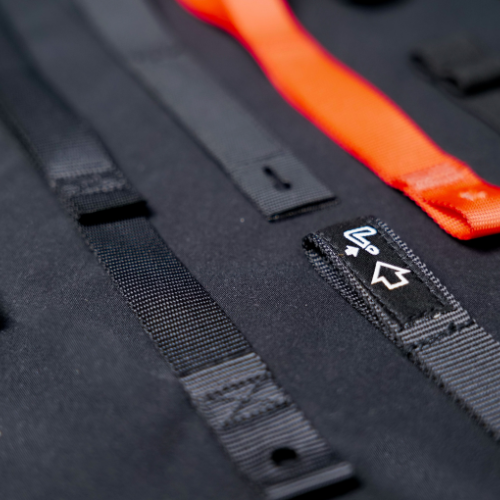
Maneuvering straps: These are functional components that enable the seat to be adjusted (movement, tilt, or folding). As they are subject to repeated handling by the user, they must be able to withstand repeated use. Fatigue resistance parameters are therefore essential for this type of strap.
Upholstery straps: Generally woven, these straps provide structural support. Their role is to hold the padding in place to ensure a comfortable and durable seat, preventing premature sagging. They are therefore essential for ensuring the comfort of vehicle seats.
Tunnel bands: Used to hold the cover in place, these elastic straps act as integrated tensioners. They ensure a perfect fit for covers and upholstery for a flawless and consistent aesthetic finish.
Cords and ropes: technical precision for vehicle interiors
Cords are a strategic component in vehicle interior design. Whether elastic or rigid, they perform return, support, or finishing functions that directly impact the modularity of certain elements.
Our expertise in braiding and knitting enables us to design a range of cords for various applications within vehicles:
Parcel shelf string
These components ensure that the shelf is lifted when the trunk is opened. These cords are designed to retain their elasticity and technical properties after repeated use. They are generally overmolded to ensure a secure attachment.
Some cords can be equipped with an EPDM sphere that prevents the cord from getting stuck in the trunk lid while ensuring optimal acoustic comfort.
Stinging cords
Used in upholstery, these cords (often elastic) keep seat covers perfectly taut on their structure, ensuring a flawless appearance throughout the vehicle’s lifetime.
Performance criteria: guaranteeing excellence
Integrating a textile component into a vehicle cannot be improvised. Beyond its primary function of support or storage, each product must meet extremely strict specifications.
Resistance and elongation
From the design phase onwards, we precisely calibrate the elongation and return force of our elastic bands. This custom adjustment ensures that the product perfectly fulfills its final function inside the car, whether it is to hold a seat cover firmly in place or to ensure the smooth lifting of a trunk shelf.
Because elastic has physical limitations, we study its critical deformation threshold to eliminate any risk of wear and premature breakage. This technical expertise allows us to choose the optimal manufacturing process (weaving, knitting, or braiding) based on the expected properties.
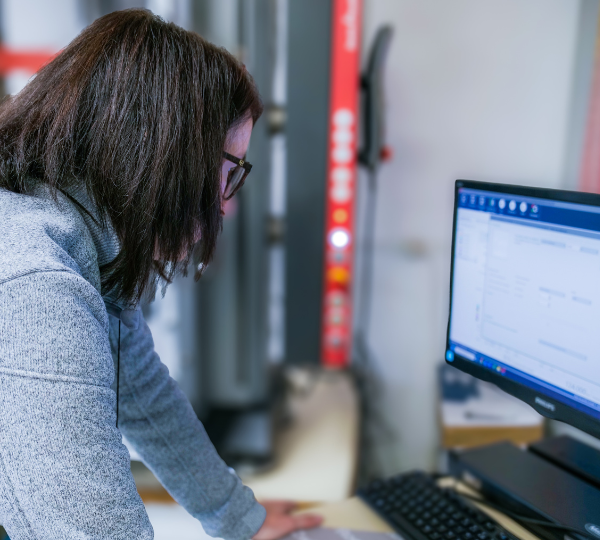
To guarantee the reliability of our solutions, we size each component (lengths, widths, thicknesses) to withstand the most demanding mechanical stresses. Finally, we subject our products to rigorous fatigue testing: we simulate thousands of cycles of use to ensure that they maintain their tension and effectiveness, trip after trip.
Durability
Inside a vehicle, textile components are sometimes subjected to extreme conditions: sudden temperature changes, intense friction, and daily handling. To ensure the durability of textiles, each fiber must be able to withstand these stresses without failing.
That is why we rigorously select the materials for our straps, nets, and cords. Our products are specifically designed to offer maximum resistance:
- to UV rays: to prevent discoloration or weakening of the fibers under the effect of the sun.
- to thermal shocks: to maintain constant elasticity and flexibility, from winter cold to summer heat.
- abrasion: to withstand thousands of friction cycles without fraying or losing their elasticity or strength.
Safety and compliance
The automotive industry is subject to numerous regulations to ensure the safety of drivers and passengers. All our products are tested to guarantee their reliability:
- Fire behavior (flammability): All our components meet combustion speed requirements. We apply specific treatments where necessary to ensure that flames do not spread. To validate this compliance, each batch may be subjected to rigorous laboratory testing in accordance with manufacturer specifications:
- Horizontal combustion test: The sample is exposed to a calibrated flame for a specific period of time. We measure the distance traveled by the flame and the time required, thus calculating the exact propagation speed.
- Residue observation (droplets): Beyond the flame, we analyze whether the material generates flaming droplets during combustion, an essential criterion for preventing the spread of fire to other elements of the passenger compartment (carpets, seats).
- Opacity and toxicity of smoke: For certain specific projects, we assess the density of the smoke emitted. The aim is to ensure that, in the event of an incident, visibility remains at a maximum to allow evacuation and that the fumes do not present any critical toxicity.
- Fogging tests: Fogging tests (or volatile component condensation tests) are crucial in the automotive industry. They measure the tendency of interior materials (textiles, plastics, leather, foam) to release volatile substances when exposed to heat. Fogging is a direct indicator of volatile organic compounds (VOCs) present in the passenger compartment. A successful test guarantees that our nets, straps, and cords do not release substances that are harmful to passenger health
Innovation at the service of ergonomics
The automotive industry is constantly evolving. With electrification, automation, and changing consumer expectations, car manufacturers are rethinking the architecture of their vehicles.
Reducing weight has become a top priority in order to maximize battery range and reduce CO2 emissions.
Our textile solutions, whether nets or straps, are excellent alternatives to rigid plastic components. They free up space and lighten the interior, while offering designers unprecedented creative freedom.
Far from being purely functional, textiles have become a visual signature. By playing with textures, weaves, and color palettes, our products bring a touch of originality and modernity to the vehicle interior.
Achievements that leave a lasting impression:
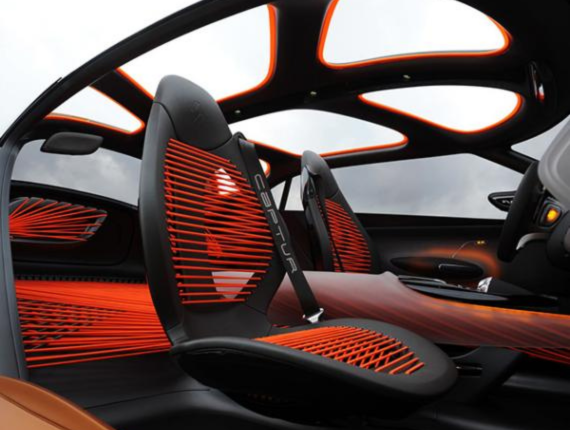
Bold design (Renault Captur): For the launch of the first Renault Captur model, we developed a disruptive net bag concept. Made from bright orange elastic cables, this system not only revolutionized storage behind the seats, but also became a strong identifying feature of the interior.
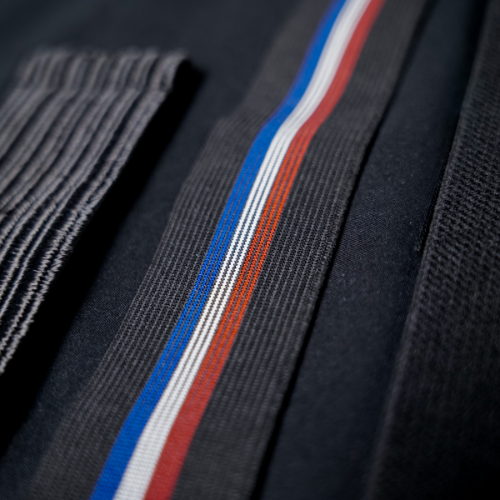
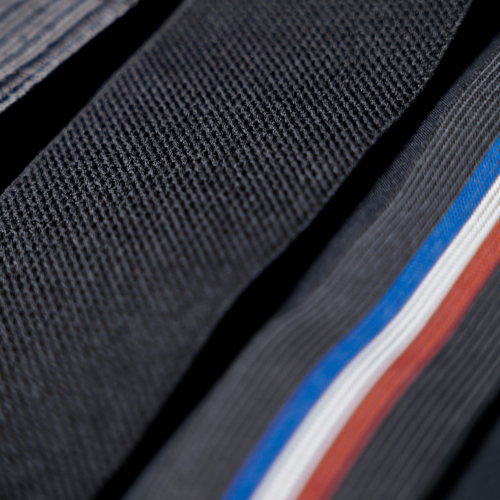
The “Made in France” signature (New Renault 4): On the new R4, our expertise is illustrated through an exclusive trunk strap. By incorporating a specific marking in the colors of the French flag, we transform a simple technical accessory into a symbol of Made in France.
How can storage space be optimized in an SUV or electric vehicle?
Optimization relies on making use of the “lost space” created by new architectures (flat floors, suspended center consoles). The use of custom-made storage nets is the most effective solution: they offer flexible storage space without the bulk of a rigid compartment. For electric vehicles, this also compensates for the reduction in trunk space due to the location of the batteries by using overhead nets.
What are the best materials for a durable car interior?
Durability depends on usage. For structure and support, polyester and polyamide are preferred for their tensile strength and abrasion resistance. For elastic elements, we recommend high-quality latex cores with a technical sheath to withstand the thermal cycles of the passenger compartment. Finally, for areas exposed to extreme stress, fibers such as Kevlar or Aramid guarantee greater reliability.
What safety standards govern automotive interior textiles?
The main standard is FMVSS 302 (or ISO 3795), which defines flammability criteria. All components must also pass fogging tests (ISO 6452) for air quality and visibility, as well as UV resistance and odor tests. As an IATF 16949-certified supplier, we guarantee that every batch complies with these manufacturer standards.
Why replace rigid plastic with straps or nets?
The first advantage is weight reduction, which is crucial for battery life. The second is acoustics (NVH): textiles eliminate the rattling noises associated with plastics. Finally, textiles offer greater design freedom and modularity than fixed injection-molded parts.
Is it possible to customize the design of the nets and straps?
Absolutely. We can work on the color (mass dyeing or colored threads), the type of mesh (diamond, hexagonal, square) and the addition of visual signatures (woven labels, color markings, flags). Our experience with the Renault Captur and the new R4 proves that nets and straps can become real style elements.