

At the heart of the driving experience, the car seat is where ergonomics, safety and cabin comfort come together. For manufacturers and suppliers, every component must be carefully designed and integrated to optimise these aspects.
For design offices and quality managers, the challenge is a complex one: how can they ensure flawless fit and long-lasting comfort whilst simplifying assembly line processes?
A strap that comes loose, a backrest mesh that sags, or an elastic cable that loses its resilience prematurely – and the whole perception of the vehicle’s quality plummets. These technical faults are not merely aesthetic issues; they have a direct impact on customer satisfaction and warranty costs in the event of replacement.
Straps and fastening cords
A seat’s performance depends not only on its external design, but also on the reliability of the hidden components that form its structure. A faulty fastening can lead to unwanted noise or premature sagging of the seat.
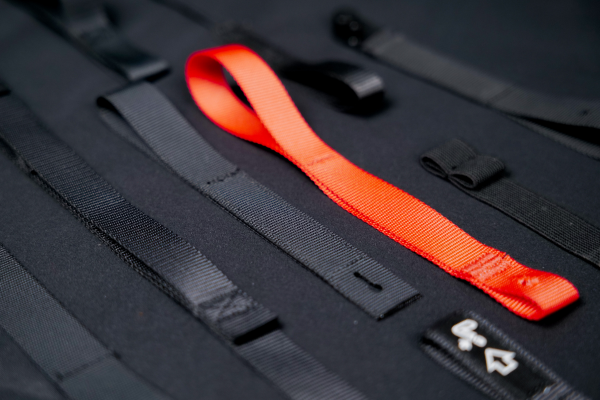
Webbing for car seats
Upholstery straps: Usually woven, these straps hold the padding securely in place. They ensure that the seat structure remains stable
Tubular straps for headrest adjustment: These are used to adjust seat covers and upholstery
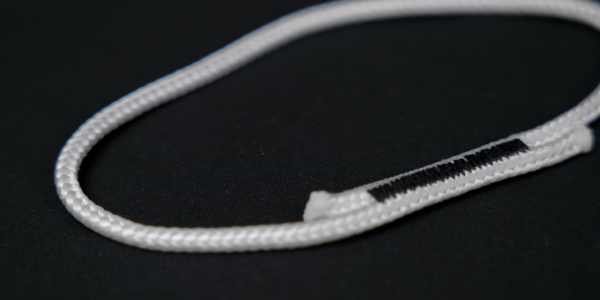
Tensioners and cables for car seats
Tightening cords: Tightening cords can be used as an alternative to headrest retention straps. The tension exerted by the cord helps to press the headrest firmly against the car seat’s padding.
Fastening straps: As well as holding a seat’s structure in place, tensioners and elastic straps can also be used to secure items such as nets to the vehicle’s seats.
Modularity of car seats
The modular design of a vehicle’s interior is essential. Passengers must be able to adjust the boot space to suit their needs and adjust the seats to their liking.
A seat cannot be a static structure. It must swivel, fold down, slide and offer smart storage solutions. For manufacturers, this modularity in car seats requires components capable of withstanding repeated handling.
Seatbelt tensioning straps
A seat’s modularity relies on smooth mechanics. Beneath the seat, the return springs play a crucial role in the user experience. They enable the seats to return to their original position effortlessly.
Seat adjustment straps
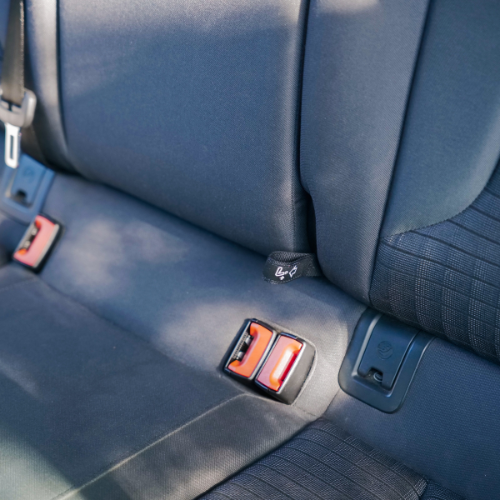
The versatility of a car’s interior often depends on the ability to transform the load space in the blink of an eye. The handling straps are specifically designed to make it easier to unlock and fold down the rear seats.
Strategically attached to the backrests or seat cushions, these straps allow the seats to be folded down in a single movement.

Making the most of space: storage nets.
The seatback pocket is a key area for optimising storage space and improving passenger comfort.
Storage nets offer a versatile and cost-effective solution for creating new storage spaces. They can be attached to the backs of the front seats or to the side panels.
Unlike rigid plastic or leather coin pouches, the fabric mesh pouch has several advantages:
Elasticity
Lightness
Design
Setup
Thanks to its elasticity, the net moulds perfectly to the shape of objects (bottles, tablets, documents), ensuring they remain securely in place throughout the journey, whilst returning to its original shape when empty.
Lightweight, these nets are an alternative to plastic storage solutions, which are often heavier and bulkier. When it comes to optimising space and weight in vehicles, this is a perfectly suited storage solution.
In the automotive world, design is the primary vehicle for conveying the brand promise. Every detail of the interior contributes to the user experience, and even the most discreet technical component must blend seamlessly with the vehicle’s visual identity. Moving away from off-the-shelf solutions, our storage nets and straps are bespoke. We offer a wide range of colours and textures to ensure perfect harmony with the upholstery and interior trim.
Whilst their preferred location remains the backs of the front seats, they can be fitted just as effectively to the side walls of boot compartments or centre consoles. Usually fitted with cords or attachment points, they are easy to integrate into the assembly lines of car manufacturers and automotive suppliers.